At the home of friends, I saw a small poster with the words "but God...!" and a scripture reference. I was interested, and made a mental note to look up the verse.
And then... I forgot it.
It came to mind again several times in the months following, so I finally did a search at Bible Gateway. Turns out the phrase comes up around sixty times in the NIV.
Sixty is a decently large number. "But" is a conjunction, connecting two thoughts with contrast and often suggesting something contrary to expectation. I've been sitting with that awhile now. It seems to describe God pretty well -- unpredictable, unexpected, unwilling to fit in the safe little boxes I sometimes foolishly create for Him in my mind.
Perhaps I'll take a little trip through the "but God" passages, and see what I find there.
Tuesday, May 31, 2011


Monday, May 23, 2011
Challenging Grace
Saul was a devoted and disciplined man, thoroughly committed to the task he had taken on -- persecuting anyone he could find that followed Jesus. Then, while traveling one day, he suddenly hit a crisis time when he encountered God, lost his sight, and was instructed to wait.
Meanwhile, a man named Ananias didn't know these details of the story. He just knew the part about Saul coming after people like him. God spoke to Ananias, too -- not to tell him the whole story or the outcome, but to give him just enough, which was mostly some really challenging instructions.
What happened next seems pretty miraculous to me: "Then Ananias went to the house [where Saul was] and entered it. Placing his hands on Saul, he said, 'Brother Saul, the Lord... has sent me so that you may see again and be filled with the Holy Spirit.'"
Seriously, amazingly miraculous! "Then Ananias went to the house [where Saul was] and entered it. Placing his hands on Saul, he said, 'Brother Saul, the Lord... has sent me so that you may see again and be filled with the Holy Spirit.'"
In faith, Ananias sought out one who had been expressing "murderous threats."
In faith, Ananias drew close to Saul and reached out to touch him.
In faith, Ananias addressed Saul as "brother."
In faith, Ananias conveyed blessings that God had planned for Saul -- of sight and of the Holy Spirit.
Ananias had strong reasons to avoid Saul, to remain distant in every way, to address him as enemy, to rain down curses. But when God called, Ananias acted in faith and obedience. And "immediately, something like scales fell from Saul's eyes, and he could see again. He got up and was baptized, and after taking some food, he regained his strength."
Saul regaining his sight is pretty significant. But what captures me today is how God chose to work through the person of Ananias, and how Ananias agreed to join in. Today I am captured again by grace, and challenged again to join wholeheartedly with God in the "ministry of reconciliation."
(The story of Saul and Ananias is found in Acts 9:1-19.)
-- Debi
Friday, April 22, 2011
Good Friday
Good Friday is a somber day, remembering Jesus’ death by crucifixion. I remember trying to explain it to a former co-worker several years ago, something like this: “It is a time to remember and honor the death of Jesus, so Good Friday services are usually like a funeral.” But that doesn’t seem quite right, because I haven’t been to a lot of funerals as persistently somber and dark as Good Friday. Perhaps the mood of a typical Good Friday service isn’t like a funeral so much as it’s like a funeral would have been if Jesus had stayed in the tomb. In Good Friday and the day following, we acknowledge the despair of the time between the certainty of Jesus’ death and the hope-giving miracle of his resurrection.
I am grateful for Good Friday because life still includes times when everything seems to be turned upside down, hopes dashed, outcome uncertain, salvation not yet apparent. We celebrate the joy of Christ’s birth at Christmas, and his resurrection on Easter – these are absolutely foundational to Christian hope. It is good, too, to respect the in-between times.
Saturday, January 22, 2011
Editing History?
Mark found a 13-digit number in our family room today and we wondered about it. I looked it up as an ISBN search -- no luck with that, but I did find an interesting link:
It's the "edit your history" part that caught my attention. Sometimes I wish there were an "edit my history" link for life. There are things I regret, things I've said and done that I wish I could go back and undo, things I regret having not said or done.
Life doesn't have such a button, so I want to choose my words and actions well.
There is something else here, too -- the gift of grace. Because of God's grace, I don't need to edit or block history. I have a God and some friends with whom I can be open about where I've been, acknowledging what I wish were different about it without pretending it didn't happen.
Healthy honesty helps me to move forward in the right direction and at peace.

 |
| Screenshot |
It's the "edit your history" part that caught my attention. Sometimes I wish there were an "edit my history" link for life. There are things I regret, things I've said and done that I wish I could go back and undo, things I regret having not said or done.
Life doesn't have such a button, so I want to choose my words and actions well.
There is something else here, too -- the gift of grace. Because of God's grace, I don't need to edit or block history. I have a God and some friends with whom I can be open about where I've been, acknowledging what I wish were different about it without pretending it didn't happen.
Healthy honesty helps me to move forward in the right direction and at peace.
Saturday, January 1, 2011
Christmas Season: Second Sunday
In our culture, we tend to build up to Christmas and then move on to the new year on December 26. Traditionally, though, the celebration has been carried on in various ways for eleven more days. January 2 is the second Sunday of the Christmas Season. Here are the lectionary readings:
Jeremiah 31:7-14
Psalm 147:12-20
Ephesians 1:3-14
John 1:1-18
You can read them here.
Jeremiah 31:7-14
Psalm 147:12-20
Ephesians 1:3-14
John 1:1-18
You can read them here.
Friday, December 31, 2010
Becoming Youier
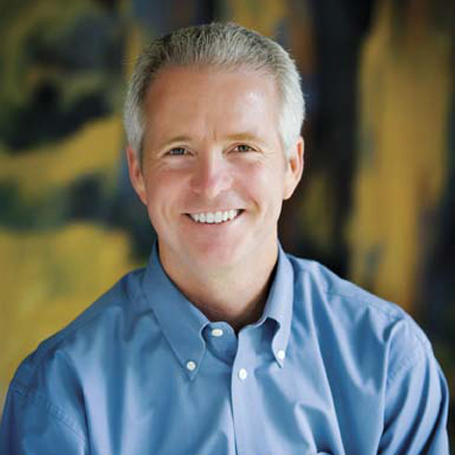 | |
| John Ortberg |
For example, before he met Christ, the Apostle Paul was a passionate, brilliant, zealous man, and he persecuted Christians. After he met Christ, he was a brilliant, passionate, zealous man, and those traits were instrumental to the spread of the gospel. In more recent times, Chuck Colson's drive, motivation and ambition led him to places of significant political influence and then to prison. After he met Christ, his drive, motivation and ambition led him to make an incredibly positive difference through prison ministries. Redemption is not replacement of the old, but its return to a better state. Ortberg concludes that God works His redemption in the life of everyone who is aligned with the Holy Spirit. "You won't just get holier, you will get you-ier," becoming more and more the excellent version of you that you were created to be.
 I was listening to this sermon on the way to Seattle for a two-day workshop on Fierce Conversations. "Fierce" is not about being bloody, cruel, or threatening, but robust, intense, strong, powerful, and passionate. "Fierce" conversations are ones in which we stop pretending, when we refuse to take the easy way out, when we bypass the simplistic answers that really don't mean squat. Fierce conversations are ones in which we function respectfully and without masks, showing up boldly as ourselves. Truly fierce conversations create respectful space that encourages others to show up boldly as themselves, too.
Scott's "fierce" sounds to me like Ortberg's "you-ier," and both sound like Christ.
Saturday, December 25, 2010
Christmas Season: First Sunday
In the Christian liturgical calendar, Christmas is not just one day, but twelve. December 26 marks the first Sunday of the Christmas season. Lectionary readings:
Isaiah 63:7-9
Psalm 148
Hebrews 2:10-18
Matthew 2:13-23
You can read them here.
Isaiah 63:7-9
Psalm 148
Hebrews 2:10-18
Matthew 2:13-23
You can read them here.
Subscribe to:
Posts (Atom)